

Author: Abigail – wwwthebrandingjournal.com
Brand image plays a central role in defining which brands can better survive and succeed in their relative markets. This article defines brand image and outlines its importance, before looking at building, improving, and measuring brand image to better position yourself in the market.

What Is a Brand Image?
Two leading branding academics, David Aaker and Kevin Keller have proposed two definitions of brand image:
“A set of associations relating to things like product attributes, benefits or price, that are organized in meaningful ways.” (Aaker, 1993)
“Perceptions about a brand reflected as associations in the minds of consumers” (Keller, 1993)
Keller believes that associations are built up as we:
- Directly experience brands and receive information about them
- Indirectly make inferences based on our pre-existing brand knowledge, for example, country of origin.
Suppose the attributes and benefits of the brand positively satisfy customers. In that case, there will be an overall favorable attitude towards the brand, and the brand can be said to have a positive brand image.
Put simply, brand image is all about how consumers feel about a brand and how they perceive it. It’s important to note that even those who do not need or use your products or services can form associations and create an image of you in the same way, so brand image is essential across the board.
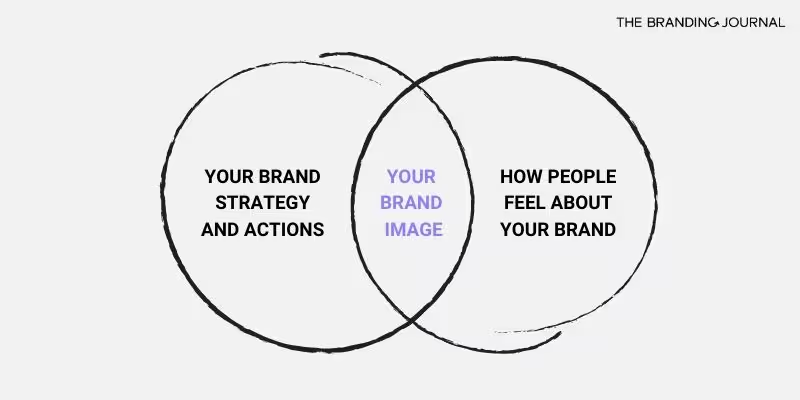
Distinguishing Brand Image from Other Branding Concepts
Brand Image vs. Brand Identity Confusing brand image and brand identity is something Aaker calls the “brand image trap” (Aaker, 1996).
Brand identity concerns what the company is trying to communicate about itself and the associations it wants customers to form regardless of whether this turns out to be the end result or not.
It is this end perception that consumers actually hold which is brand image. A company can control its brand identity and always endeavor to align this with the brand image that actually exists externally in consumers’ minds.
Brand Identity | Brand Image |
Developed internally | Developed externally |
Who do you want to be? (The company’s desired image) | How do consumers feel about you? (The consumer’s perceived image) |
Active in nature | Passive in nature |
Forward-looking: continually trying to create and establish your desired identity | Backward-looking: your identity based on consumers’ changing perceptions of you over time |
Brand Image vs. Brand Awareness
Brand awareness is also often confused with brand image.
Brand awareness concerns how consumers can think of a brand when they begin a product or service search. It’s all about brand salience and how prominent a brand is in a consumer’s mind, and therefore relates more to memory and recall.
Brand image, however, concerns the brand associations and perceptions built-up over time which paints a picture of the brand overall.
Why is Brand Image So Important?
1. Competitive Advantage
Brand image can positively impact brand equity and is therefore vital to capturing a larger proportion of the market share. This allows companies to charge premium prices, which customers will actually be willing to pay or implement brand or product extension strategies more successfully since consumers view you positively and therefore trust you to deliver.
2. Positive Reputation
A positive brand image implies that existing and potential customers view your brand as being one that satisfies or could satisfy their needs successfully (through physical product attributes and benefits, or more intangible benefits such as a desirable price point).
3. Overall Reflection of Management
As perceived by consumers, your brand image can be seen as a reflection of how well you manage your business and meet the needs of the market overall. This will impact how well you can compete with other incumbent firms.
How to Build Brand Image?
1. Work on Your Brand Identity
A company cannot control its brand image but can manage its brand identity, amongst other aspects of a brand strategy. Therefore it’s essential to truly understand what you want your brand to stand for, and communicate this effectively to the market and beyond. This ensures the company can build up positive associations, which are then converted into the perceptions comprising brand image.
Sending out well-defined messages about the values and missions underpinning your brand can, in turn, lead to positive external perceptions (brand image) which align closely with your internally desired identity (brand identity).
Similarly, it’s vital to ensure that your values and missions are relevant and valuable to your target audience. Being customer-centric enables you to indirectly impact the associations consumers form towards you, allowing you to influence the creation of brand images indirectly.